About Me

My photo
I'm a woman entering "the third chapter" and fascinated by the journey.

Friday, May 11, 2012

Current blossoms


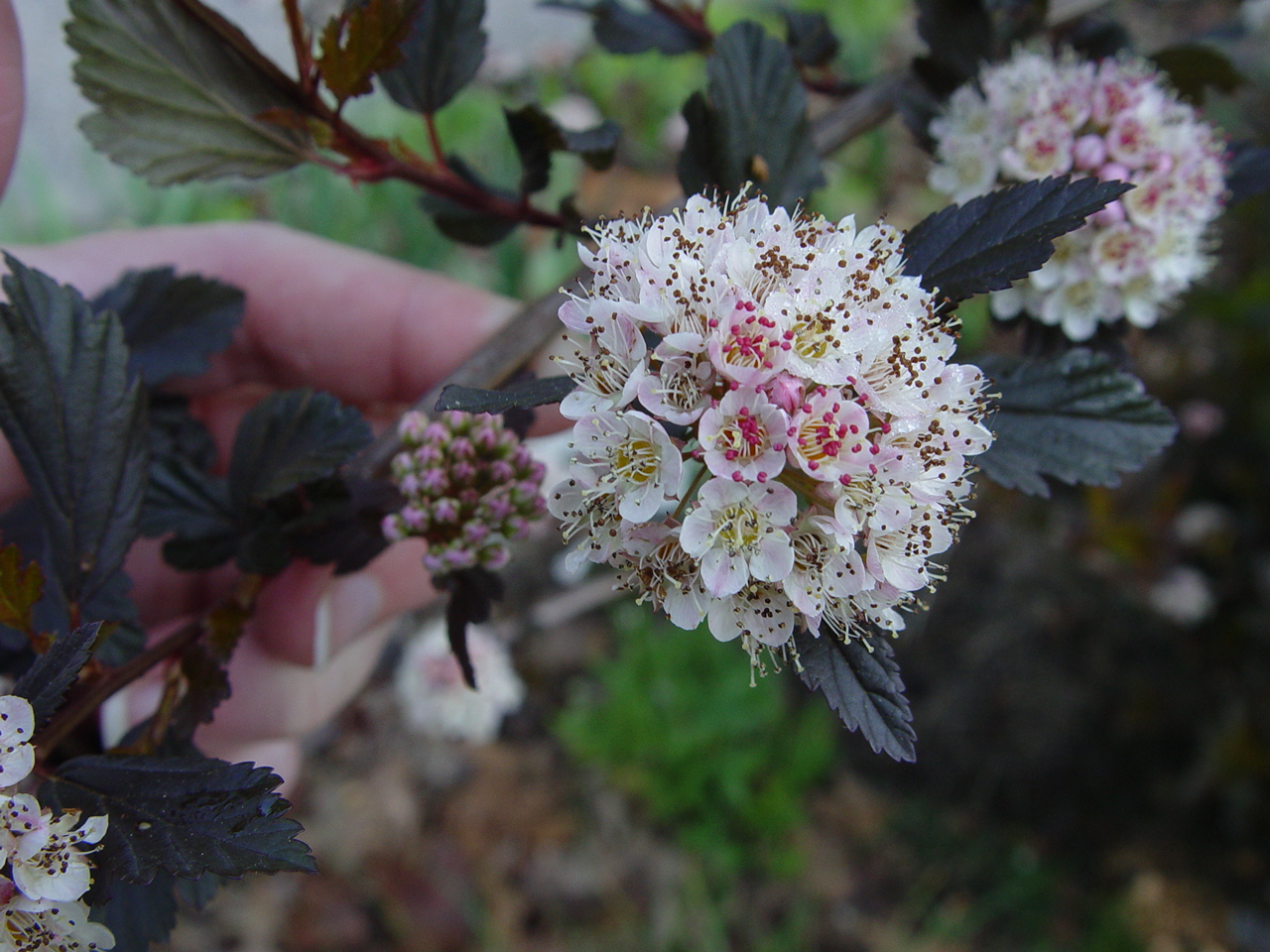
May is generally a good month in the garden, but this is an odd May. The last daffodils finished just last week, the first having opened in mid-March. The few tulips we have were done in a single April week, and the irises, usually Memorial Day flowers, are closing in on the end of their season. And the early daylilies have flower stalks and buds--WAY too early! But the May flowers have indeed arrived, so herewith, a sampling of yesterday morning's offerings:
Physocarpus "Summer Wine" (detail below)


creeping thyme 

Kenilworth ivy


and clematis "Betty Corning." Some irises are still with us, 
along with a last Oriental poppy. 
 
And the roses are coming on. While the bush barely survived its transplanting last summer, "Dortmund," though dwarfed, is blooming, as is (drum roll, please)     
Madame Isaac Periere! (Ignore the black spot: it has been a VERY wet spring.)

Thursday, May 10, 2012

An uninvited guest

Last week, grading final exams on the screened porch, I noticed something very odd out on the back forty (aka the back yard).
At first glance, it resembled a mop, or perhaps the remnants of the wig Elizabeth Taylor wore in a 1960's photograph when she decided to match her shih tzu However, the mop moved, revealing itself as. . . .

a skunk!
Given that it was not yet fully dark, and I had always thought of skunks as nocturnal creatures, and this skunk was moving very slowly and in a wobbly fashion, I was concerned and enlisted the expertise of the good folks on the Wildlife Gardeners Forum. The consensus was that the skunk was probably fine.

Certainly, it waddled on its way in a seemingly unconcerned fashion. When I returned from greeting the neighbors who had just returned from a winter in Florida, the skunk had vanished, probably into one of the numerous holes found in the backyard extension of the city wildlife refuge. Later,discussing this sighting with the people across the street, I learned that this particular readily identifiable skunk has been in the neighborhood for at least a couple of years and is evidently healthy and unconcerned about the human and canine activity in the area where she has chosen to forage for grubs.

Friday, April 27, 2012

Kids...

It looks as if this year will bring more adolescent avian amusement. Yesterday afternoon, a glance out the window to find the source of some hysterical-sounding cheeping revealed a young robin--no eyebrows, but still a few spots in its feathers--fluffed out on the ground under a bird feeder. This fledgling was nearly as large as an adult (though exact size is difficult to determine when all the feathers are fully fluffed) but was, in typical adolescent avian fashion, screaming for food, which a nearby adult was attempting to provide, just not nearly fast enough to please said AA. Attempts to photograph the activity from inside the house proving unsatisfactory, I headed to the back yard with the camera. As I approached, the adolescent ran to the end of a planting bed on its stubby little legs. When I kept approaching, the AA suddenly discovered that it could fly. Will finding its own worms be the next acquired skill?

Monday, April 23, 2012

The bad guys

It's too bad that so many lovely plants are actually not things we should encourage. Besides purple loosestrife, perhaps the poster child for invasives, numbers of the plants that give beauty in spring are among the bad guys of the plant world.

Wandering the grassland trail at Wildwood Metropark this past weekend, I discovered that the liveliest plant in that particular area was autumn olive (Eleagnus umbellata). This lovely thug was introduced to this continent from its native Asia in 1830 but really took off after the US soil Conservation Service (worried much more about the Dust Bowl than about escaping plants in those days) recommended it for erosion control in the 1940's. Today, it has invaded grasslands in many parts of the US, in part because birds love its fall fruits and deposit them in various places.


Unfortunately, the eleagnus wasn't the only problem. Tatarian honeysuckle has naturalized in most parts of the US, crowding out native species.

It's too bad that beauty isn't always well-behaved.

Saturday, April 21, 2012

Mayapple Mania

Mayapples are not a plant to which I have generally given much thought, fond as I am of showy things in bright colors. Plants that show up suddenly in the spring and are mostly green, then go dormant in the heat of the summer when I usually have time to be outside, don't typically make it onto my list of favorite plants. This spring, though, is different; it came earlier and is lasting longer than spring generally does in our part of the world, and I've been making time to get out. This Earth Day weekend found me in Toledo, where of course my beloved and I trekked to Wildwood Metropark, where the mayapples are plentiful.


Wikipedia says that the plants form large clumps in mesic woods, information that I would have to say is accurate.


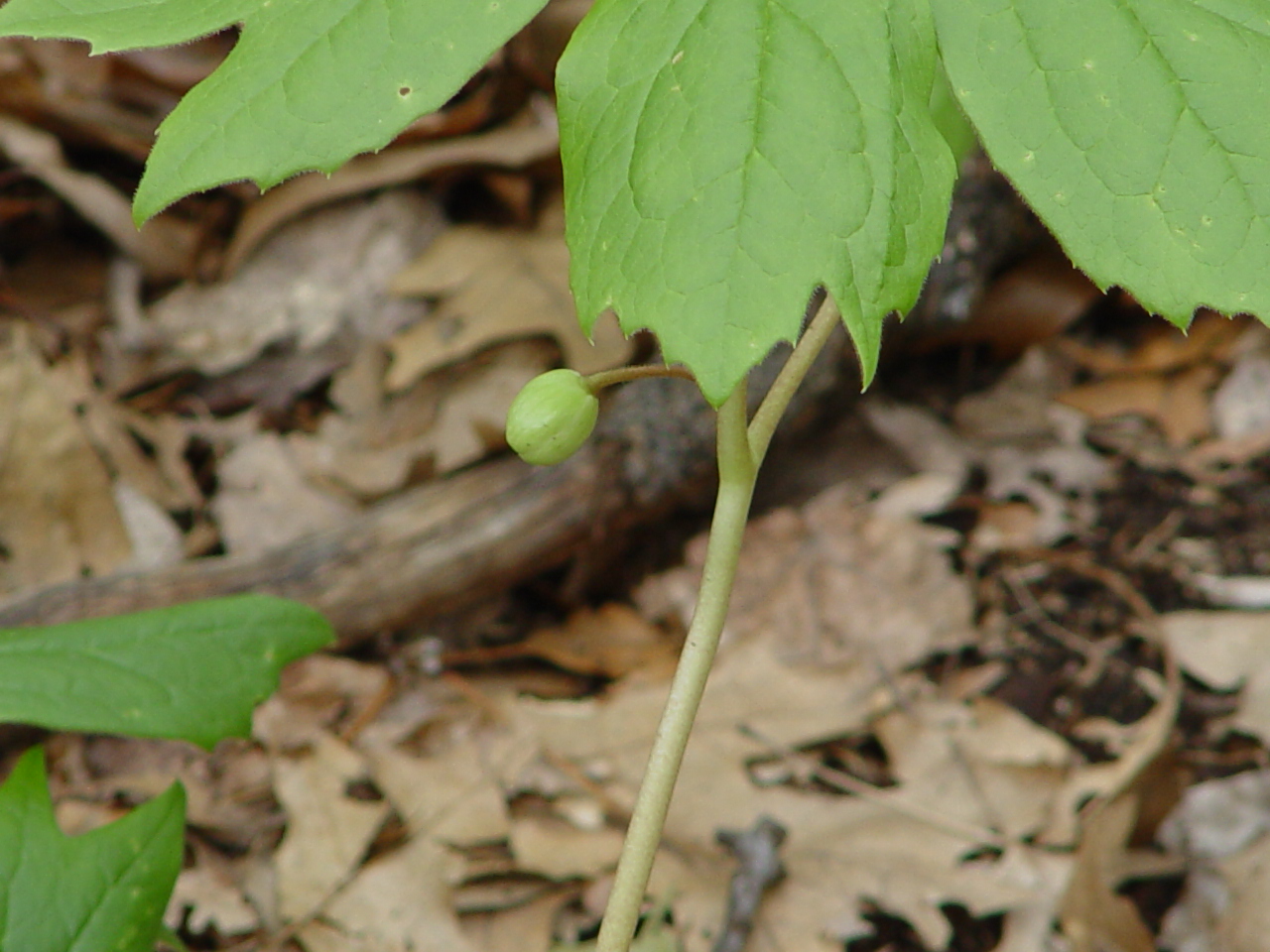
Wikipedia also says, however, that the "apples" do not arrive in May but later in the summer. No one told the Wildwood plants, numbers of which are fruiting in April:


I'm not sure I had ever noticed mayapple in bloom before. Unlike many of the spring flowers, mayapples do not flaunt their blossoms but carry them under the leaves. I had to have help to photograph these.

An interesting tidbit from the Nature Notes blog on the Toledo Metroparks website: mayapple fruit is a favorite food of turtles, and the seeds germinate more enthusiastically for having passed through the digestive system of said reptile. From the numbers of mayapples we saw today, last year must have been a good one for turtles.

Tuesday, April 17, 2012

Dragonfly

Yesterday brought a creature to the yard that I did not expect--a dragonfly. Attempting to strip turf from yet another planting-bed-to-be with a mattock, our ancient spade having decided that it had been bent one too many times, I happened to look up from my huffing and puffing to catch a flash of iridescence. No idea what kind it was, except that it wasn't one of the really cool blue ones--just a brownish-greenish-blackish dragonfly darting about where dragonflies generally don't go. I expect them near water, and we haven't even put out the birdbath yet, but this one was already on the prowl, looking for dragonfly prey.

Given the ardent carnivory of dragonflies (they can eat their own weight in less than an hour), I'm glad I'm too big to interest them.

Sunday, April 15, 2012

Gift Plants

The term "gift plant" usually brings to mind (at least for me) potted hydrangeas with oversized blossoms, or tiny, tender azaleas blooming in December at a height of eight or ten inches, the kind of plants that generally die the moment they're exposed to actual weather (at least in this part of the world). But the month of April has brought another kind of gift plant, some in large numbers.

Given that West Virginia was once part of the Great Eastern Forest, it should be no surprise that forest plants are showing up in droves in the unmown parts of our back yard (and since most of the grass growing in the unwatered yellow clay in the limited sunny areas of our back quarter-acre is pretty scraggly and tops out at four to six inches, mowing doesn't happen very often). Given my general laziness and overall fondness for trees, it also comes as no surprise that I am delighted to see our yard growing its own privacy screen and bird habitat. Some things will be encouraged to join the Great Compost Pile of the Plant Hereafter (we do not need a hundred wild cherry trees) and eventually improve the yellow clay subsoil that was left exposed when our neighborhood was created; others, however, will be encouraged to grow, preferably quickly.

Most civilized folk are not overly fond of sweet gum trees, given their penchant for littering the universe with multitudes of prickly gumballs. Still, their fall color is almost unbeatable, so I didn't object when the tree across the street gifted us with a healthy seedling, grown to a three-foot height in our shady compost area. We just so happened to have a bare spot at the edge of the backyard slope, where a sweet gum can receive several hours of sun and drop its gumballs into the dip where the oak trees leave their leaves every fall. Prickle problem solved.

The only mature willow oak in the neighborhood was at the end of the block. Its humans decided to cut it down last fall, but this local representative of Thomas Jefferson's favorite tree species evidently produced plenty of acorns in its last few years of life, and the local squirrel population evidently spread them around. We have several young ones (some in need of homes, unfortunately), one of which sprouted next to our hemlock snag, just past the drip line of the oldest white oak, right where we want another tree. The largest seedling was in the wrong place, but it seems to be doing fine since we moved it to the lower yard, where it will receive sun all morning for the rest of its long life (unless some unappreciative future human cuts it down).


Nearly everyone likes dogwoods, it seems, including the Plant Gift Gods, and we have been gifted with a plethora of the little things, including in the area where we had to have two white pines taken down. If we live long enough, we will get to enjoy a dogwood glade hiding the neighbor's fence, providing LOTS of berries for birds on their fall migration. We've been able to move two to the lower yard, where they will eventually help to provide privacy from the street and join the (baby) arrowwood viburnum hedge in creating a fall foliage spectacle and feeding frenzy.

There's just no end to the excitement around here.