About Me

My photo
I'm a woman entering "the third chapter" and fascinated by the journey.

Saturday, January 6, 2024

Coexistence in the city

     This winter finds me back in Merida for the first time since 2020, my last Yucatan winter having been spent next to Progreso's western dunes. My winter travel companion, a serious wildlife photographer, and I opted for the city to facilitate bus travel to some of the parks in this area, but several Covid infections in our circle have caused some activity restrictions while we waited to complete post-exposure testing. So far, we are both Covid-free and remain grateful for vaccines, good masks, and CDC advice on precautions.

     We are also grateful for the AirBnB we found. While this is a busy neighborhood within walking distance of the even busier main plaza and several other areas popular with visitors, it is a neighborhood where homeowners have planted trees, making our front and back terraces good for birdwatching while sipping coffee in our nightwear. 

Yes, we had a "cold" spell--nights below 60 degrees.

And we are indeed seeing birds. White-fronted parrots fly over the house every morning, and great-tailed grackles and white-winged doves are ubiquitous. (Fortunately, we are fond of both, as they are extremely vocal birds.) Yellow-lored parrots occasionally check out a tree across the street. A pair of doves was building a nest in a tree adjacent to the back terrace, but that activity seems to have stopped when one of the pair vanished. A VERY enthusiastic pink-flowering vine is beginning to attract hummingbirds, and one day a motmot visited a neighbor's bamboo.

     Orioles are fairly frequent visitors. We think this handsome creature is an orange oriole, endemic to the Yucatan peninsula. 

Photo by Kate Fitzgerald

Every day brings woodpeckers checking for insects in nearby trees. In previous years, Yucatan has been entering its dry season when I have visited, but the rains continued through most of December, leaving lots of leaves, buds, flowers, and (unfortunately for some human sinuses) pollen. But the insects and insectivorous birds are happy.

Photo by Kate Fitzgerald

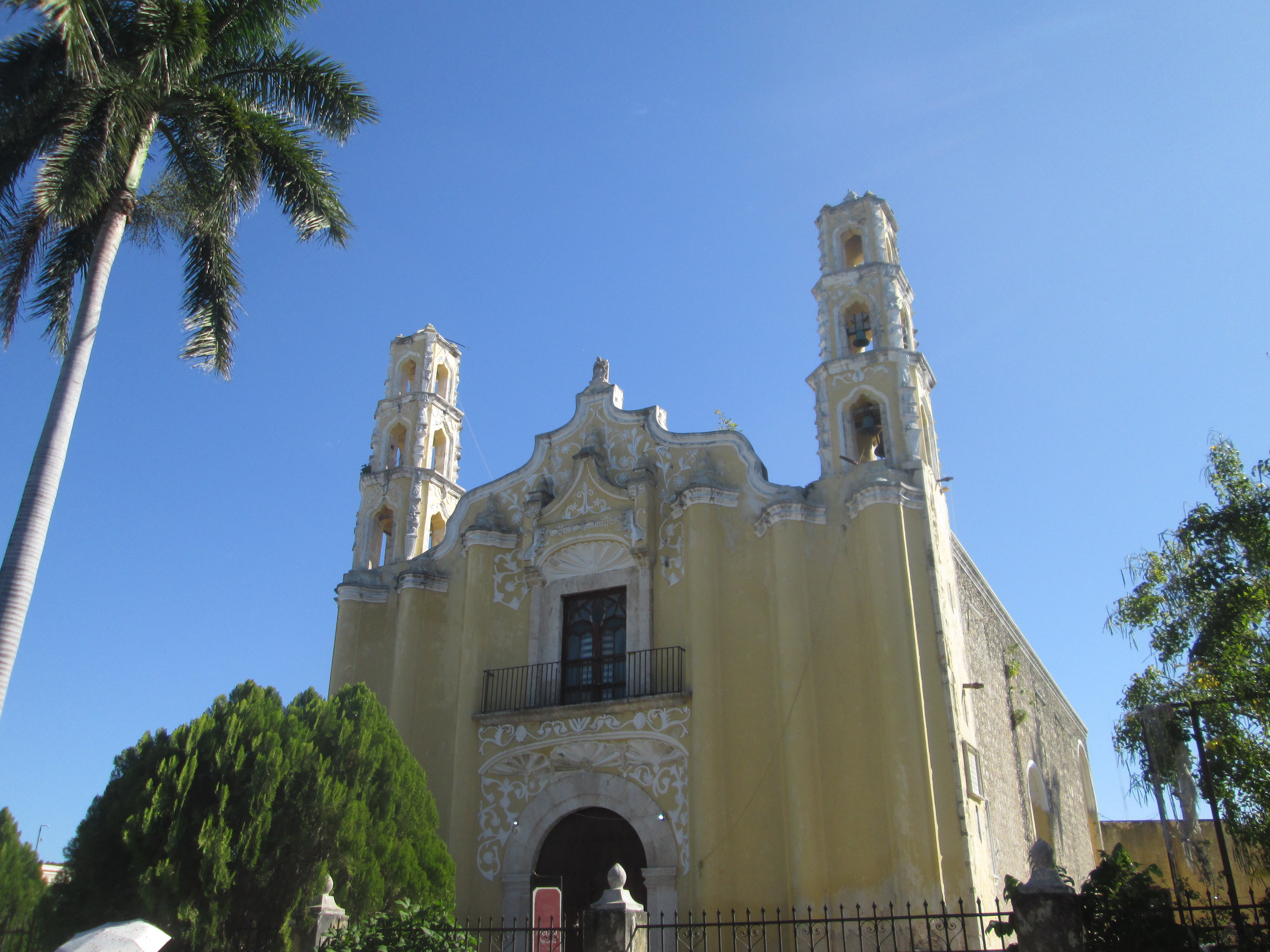
Despite the popularity of non-native ornamentals like the bougainvillea planted in every third yard and snagging unwary walkers on its thorns, we are finding Yucatecan native plants used in a number of city gardens. In front of the 18th-century Iglesia de San Juan Bautista (Church of St. John the Baptist, for those with even less Spanish than I), pollinators were all over a gorgeous pink-flowering bush,


which a little research revealed to be the native Ipomoea carnea, or bush morning glory. The plant, while toxic to cattle (which did not evolve in this part of the world anyway), was used in rituals, for pipemaking, and as medicine. Obviously, it is also important to insects, as this gall-covered leaf indicates. (Unfortunately, I have not yet discovered what species make use of this plant.)

     It always pleases me to see wildness in places long inhabited by humans. The church that was home to the Sanjuanista reform movement of the early 1800s is a latecomer to this area, but I find it beautiful anyway. We will be visiting again to see what other creatures make use of this small urban park.


Sunday, December 31, 2023

The Year When Not Much Got Done (?)

         Certainly, 2023 did not see me doing much blogging, and it was a year when a distressing number of projects did not advance much. Equally certainly, it was a difficult year: a wonderful young man who poured his heart and energy into the pollinator habitat project died suddenly in April, while the friend who started several solar projects in Marietta and was fading away from dementia died in June. Other friends dealt with cardiac problems, memory loss, falls, and other of the ills to which flesh is heir, and I myself had several health crises, all resolved but all reminders that the body fails with time. Nothing unusual or unexpected in human life, but never easy when it's your turn.

    And of course, life went on despite our losses and struggles. The pollinator habitat did not get as much human attention as it has sometimes gotten, so particular plants became excessively enthusiastic and had eventually to be cut back or thinned to make room for less space-hungry neighbors. (Are you listening, Silphium perfoliatum?) What had been an open mulched space between the bottom of the slope and the shrub border filled in with partridge pea, evening primrose, cosmos, wingstem, violets, and what proved to be saw-toothed sunflower, a ten-foot yellow daisy with purple stems.

     The site's fauna had no problems with the perhaps-excessive plant growth. While people in some parts of the county reported seeing few bees, they were all over our site all the time,

along with butterflies, moths, beetles, caterpillars, and quite an assortment of birds, including gaggles of goldfinches. After a hard frost left most of the site's vegetation looking less than its best, the little brown birds moved in to forage among the stems and on the ground.

     And, thinking back, the human involvement did not stop. The city approved the planting of a memorial garden honoring our late volunteer and the couple who first gardened the site many years ago. Though work on that part of the site has only begun, neighbors and others, including children of the late couple, have donated plants. In April, Marietta's mayor joined a Girl Scout troop in planting an apple tree as one of the first additions to the memorial garden.

Mayor Josh Schlicher and Girl Scouts, photo by Nancy Taylor of the Marietta Times

Other amenities for humans have been added. Thanks to a health department grant, the habitat has a one-of-a-kind bench designed by local artist Todd Morrow.

     Along the riverbank below the habitat, the city has installed two more benches, giving the human users of the site multiple places to rest and enjoy river and habitat views. Across the river, behind Marietta's Armory Square, the solar charging bench that was part of the initial grant project was installed along the river trail and dedicated in November. Almost from day one, users of the trail have topped off their phone batteries while recharging themselves along the river. 

     Hmmm. It might be more accurate to say that this particular human did not get much done. Other things are moving along just fine.

Friday, February 24, 2023

Loving it, but. . .

Our part of Ohio has moved beyond being "unseasonably warm." Yesterday a birthday gathering in the neighborhood found a group of women over sixty sitting outdoors in short sleeves as the temperature was still over seventy--at 6:00 PM--IN FEBRUARY. According to an article in today's Guardian, southern Ohio and many other Eastern regions are seeing spring conditions earlier than at any time since record-keeping began.

Part of me welcomes the warmth, my bones and breathing not doing well in cold. I love being able to pick daffodils on a sunny afternoon,


and the year's first creeping veronica is always a cheerful-making sight.

But--it's February. February should not be springtime in Ohio. As welcome as warm weather and spring flowers are, plant growth needs to sync with the needs of wildlife. You might notice the pollen on the veronica petals in the photo above: unfortunately, I have yet to see a single pollinating insect. If our native spring bloomers (which neither of the aforementioned plants is) bloom early, before some of the specialist pollinators emerge, these insects that depend on particular plant species may not survive. If other less specialized insects emerge and manage to reproduce early, before migratory birds start on their day-length-dependent journeys, those birds may discover reduced food supplies. Nesting birds may not find the protein-rich larvae on which the young of nearly all species depend. 

February should not be tick season in Ohio, but ticks are already being reported, and at least one acquaintance has had to seek medical attention for a tick bite. Yuck.

And did I mention hay fever? Earlier springs and later falls mean longer growing seasons, with more plants' seasons overlapping, resulting in more types of pollen in the air for longer periods of time. This is not good news for allergy sufferers.

As much as I love spring, these are worrisome signs.


Thursday, February 2, 2023

Is it spring yet?

     I don't think so, given that the temperature this morning was a decidedly non-balmy 19 degrees, and the snow from earlier this week has not melted. According to Punxsatawny Phil the weather rodent, we will have six more weeks of winter, but to the ancient Irish,  February 1 and/or 2 marked the beginning of spring. (Hey, calendars have been revised over the years.)

    Having just checked the weather in the parts of Ireland where various ancestors lived, I see that it is warmer there than here this week with lows generally in the forties, weather that could perhaps charitably be interpreted as springlike. The dating of spring to early February seems to be related to the reproductive cycles of the sheep that were of such economic importance, providing wool, meat, and milk to the inhabitants of the island. The earliest lambs are born about now, and the ewes begin to lactate. Imbolc, as the day was known, was celebrated with foods made with milk, cheese, or butter (a tradition I can definitely manage). Pancakes with blackberry jam were also traditional (and probably not happening at my house, though I do need to use up some sour milk, and wonder if blueberries might do. . . ).

    People being unlikely to give up their celebrations, Feb. 2 became a Christian holiday honoring St. Patrick's friend St. Brigid, who may or may not have been the same as the ancient Celtic goddess. (And since she was a protector of the people and associated with poetry and learning, and Patrick seems to have had good intentions, I can almost imagine them collaborating.) The ancient practices continued, and a few more got added, such as collecting alms for the poor.

    This year, the Republic of Ireland has made Imbolc/St. Brigid's Day a national public holiday, the first named after a woman. Celebrations there include music by Irish women, since Brigid was a patron of the arts. 

    Listening to Irish music and eating pancakes with butter--much more my kind of celebration than heading to a lambing shed in the middle of the night. 


Sunday, January 29, 2023

'Tis the season

for anticipation, and I don't mean of sugarplums and the like. Our erratic January weather finds some living beings in our neighborhood anticipating spring. One human neighbor was jogging in shorts on a fifty-degree day. (There's always one.) Wrens are singing as if their fancies are already turning to thoughts of love, though January seems a bit early for that.

While it is not surprising that the crocuses are sending up leaves, January is not generally daffodil season. Evidently, no one shared that information with some of the bulbs in our lawn strip, a few of which are already attempting bloom stalks.


I fear that that specimen may not survive to bloom in April. The volunteer shepherd's purse behind it would likely survive any disaster.

Some of the tulips are getting in on the act.


Even the moss transplanted from a brick wall to the lawn strip last fall is sending up what I think are sporophytes, preparing to colonize more of Sacra Via (assuming it can overcome the ground ivy).


According to the calendar, spring will not arrive for fifty days, but some beings are more than ready for it.


Saturday, December 31, 2022

The Year in Review

Social media posts this year seemed to report many of us being in a funk, bogged down by a sense of general malaise, and I have to confess that I have found myself more “doless” (to use my mother's wonderful Appalachian term) than usual. Whether this is pandemic hangover, trying to reenter a world in which figuring out what is “normal” or safe is tiring, political exhaustion, or something else is difficult for me to say. Certainly, I have not been writing much this year.

Like most years, 2022 has been a mix, and as seems inevitable, there have been losses: early in the year, a dear former student and a colleague died unexpectedly, one of heart failure and one of Covid. In the spring, a friend lost her husband and her mother within a month. Later in the year, three church friends died, one hit by a car crossing the highway one Saturday evening. A dear friend on the next block went into an emotional collapse when the dog she knows will be her last died, and our two eldest felines have begun what are likely their final declines. All the aforementioned non-humans were or are elderly, but there is something especially poignant about watching the slow fade of an animal whose adolescence one remembers.

My gardening groove never quite returned after the trauma of the gas line replacement and the loss of a foot of topsoil. Some of the poor plants dug up in the rescue attempt were being put back in the ground in late November, and a few unfortunates are still in pots and may or may not survive the winter. The gardener's lack of enthusiasm was compounded by an incorrect move while loading a large shrub and the discovery of previously undiagnosed spinal problems, fortunately nothing particularly serious but definitely annoying and limiting. Aren't we supposed to be able to keep Doing the Things as long as we want?

Looking at 2022 as a whole, though, many good things happened. During the Yucatan winter (which I will miss this year due to the failing felines), more Ohio friends got to experience that much-loved place. 

One configuration of “us” rescued a puppy before it could become crocodile food,

and  the little guy became the companion of a child dying of cancer and, eventually, of the child's mother.

Another week, a group of Wild Women celebrated a friend's 80th birthday with a trip to Rio Lagartos. On our boat trip to various parts of that bioreserve, our nature guide's friend did a live broadcast for his radio show. Back in Ohio, a Minnesota friend visited during the May warbler migration, so of course a visit to Magee Marsh was required.  

The rest of the year, which featured no getaways of more than two nights, brought get-togethers with extended family and short explorations of eastern Ohio treasures like Cuyahoga Valley National Park, no slouch in the natural beauty department. 

Even closer to home, 2022 was a good year for Marietta projects. Through the work of our city administration and engaged (not to say stubborn) citizens, there has been progress toward improved pedestrian safety and increased public transportation. Our water and wastewater treatment systems will be getting much-needed overhaul. The pollinator habitat has expanded, its projects attracting a variety of volunteers (not to mention pollinators). It is likely that there will be accessibility improvements in the fairly near future. The Harmar Bridge butterfly garden is doing well in its first year, and the small butterfly garden in a tiny downtown park had a very good year. 

A landscape steward who recently moved back to our area in retirement has organized crews to remove invasive plants and collect, sort, and plant native seeds in nearby protected wild areas. Good things are in the offing.

And from any sort of historical perspective, most of us alive in the US today are living easier and longer lives than most of our homo sapiens ancestors. Some details mixed with personal reflection:

  • Yes, Covid has caused a recent drop in average life expectancy, but most of us will live into our seventies or beyond, not the 47.3-year average at the turn of the twentieth century. In 1900, of 100,000 children born, 2000 would die before their fifth birthday. Today, that number is fewer than 25.

  • 2022 was the year that found me older than my first husband lived to be (which a friend had warned me is a rather unsettling milepost) and, when I stopped to think about it, older than most of the writers I taught in my career. Leaving out the whole crew of those who died unarguably young (Marlowe, Shelley, Keats, at least two of the Brontës), writers often did not survive to what we think of as old age: Chaucer died at sixty, Shakespeare in his fifties, all the lady lyricists who were the favorite poets of my adolescent years by their mid-fifties, Thoreau at forty-four, and Austen at forty-one. They got a lot done in not a lot of time, but I suspect most would have welcomed more time

  • 99.5% of us have indoor plumbing. As a child born in rural Scioto County, Ohio, in the 1950s, I was in the third grade before we lived in a home with a flush toilet. (And I do NOT miss the good old days of outhouses.)

  • My family got our first telephone in 1966. It was a party line. When I was in college in the Seventies, the dorm had one phone for the 24 girls on our floor. Being in constant contact with anyone was impossible, and video chat was something out of science fiction. When someone moved away, staying in touch took real effort. Today, we can talk to anyone, nearly anywhere, pretty much whenever we want.

  • Most of the world was rightly horrified by Russia's invasion of Ukraine and the likely war crimes that have been committed. For most of the last five thousand or so years, war and invasion were more common than not. There was a reason for all those European castles, and it wasn't to serve as backdrop for Disney films.

So my resolution for 2023 is to work on my sense of perspective. If these are not the best of times, they are probably also not the worst. 


Wednesday, November 30, 2022

Life goes on

 at the habitat, even at the end of November. Yesterday afternoon found a few insects making use of the late blooms despite our already having had one snow. A yellow butterfly (some kind of sulphur) refused to be photographed, but a very skittery skipper did finally settle down to feed on a Drummond's aster, though it still would not position itself to enable an ID.

The asters were still reasonably plentiful and in reasonable bloom.


Hoverflies were still hovering (though not cooperating with the photographer), and chipping sparrows and other small birds were making use of the site, no doubt because of the plethora of seeds.

Goldenrod

Sunflower
New England aster

The shrubs in the new shrub border seem to be loaded with buds, and while we will no doubt have to remove some in the spring, the spotted dead nettle has come back and will provide some of the earliest blooms for the earliest pollinators.

The end of the showy season does not mean that nothing is happening; we just need to pay a little closer attention to see what is there.