About Me

My photo
I'm a woman entering "the third chapter" and fascinated by the journey.

Friday, June 11, 2021

It takes a village

to green a city. The original Harmar Riverbank Pollinator Project is coming along nicely (or at least the plants we planted have all lived--though the plants we don't want are making an enthusiastic return and the best poison ivy remedies are a frequent discussion topic among volunteers). The city has made water available and a neighbor has given us a spot to store a hose, so the recent hot, dry spell seems to have done no harm. The annuals tucked in for some immediate color and nectar are blooming, the perennials are considerably larger and fuller than they were, with a few blooms showing up on the early species, and more plants have been donated to the site. These are Good Things.


Perhaps even better news than plants that have not died is the support from residents. People walking past regularly stop to chat with volunteers, and the garden team is growing. Surprise support shows up.  On a recent work day, an artist walking her dog ran back to her home for items to make that day's edging task easier--and trusted that we would get them back to her. It's that kind of place.

Perhaps even better is that another pollinator-friendly public garden is taking shape literally just around the corner, again created by volunteers, including a city council member and the owner of a floral design shop. Again, the neighborhood stepped in. In the middle of what is to be a flowering walkway was an old post that once held a sign that no one seems to remember. The post had been largely dug out by an intrepid volunteer, but it was set in concrete, and that day's team tended toward gray hair and joints not what they once were. 

Then, out of an apartment across the street, emerged a guy who literally wrestled the post out of the ground and onto the sidewalk. Another neighbor brought a chainsaw, and the ancient post quickly became history. (Apologies for the blurry photograph.) 

Yes, it is that kind of place. Stay tuned for further developments.


Monday, May 17, 2021

Positive Changes

     Yes, it's been a while. Lots of thinking, lots of decision-making, lots of novel-reading over the last few months. The upshot: life is good.

    One of the best things is the Harmar Riverbank Pollinator Project undertaken by a group of local volunteers. This city-owned space adjoins a bike path and terminates at a kayak launch. At one time, a neighbor had put in a cottage-style garden on the steep slope next to his home, but time marched on, he got old and eventually died, and the friend who had helped with maintenance also got too old to clamber around the space. Another valiant neighbor took over mowing and using a string trimmer, but there had been no actual gardener tending the site for a number of years. This sunny slope with actual decent soil still flowered, but Johnson grass had invaded, invasive ditch lilies had proliferated in their thousands, and Japanese honeysuckle, bigroot morning glory, and Virginia creeper were creeping all over the hillside. And did I mention the enthusiastic spread of an opportunistic plant beloved of migrating birds--poison ivy? 

    The slope also contained quite a bit of native aster, goldenrod, and wingstem, so once the city gave its blessing to the reworking of the site, our group of volunteers did a plant rescue. We have since learned that the wingstem and aster on this site did not really need our help, but a nearby slope needs all the native composites it can get--a post for another day. We also opted to rescue the streetside border of bearded irises in honor of the site's former gardener.

    Even though the site became "ours" only in late October, we went ahead with solarization, hoping for a warm winter (which we did not get). 


    The site being in possession of good soil, we noticed in March that daffodils were attempting to force the plastic off the site, and, being tenderhearted, we opted to removed one of the plastic sheets and keep more of the historic planting. We also realized that the slope needs to continue to "cook" through the summer to kill off the existing vegetation. This led to a decision to plant only Phase One in the spring.


    The daffodils put on quite a show but proved to be another maintenance headache, as did the Lycoris squamigera (known around here as "naked ladies") at the bottom of the slope. Making room for our native plants required removal of most of the non-native bulbs, which are spending their summer off-site for replanting on the main slope in the fall. The current challenge is finding summer homes for five forty-pound bags and three five-gallon tubs of bulbs, most of which are young and need time in good soil to mature. Sigh.

    But Planting Day finally came. Yesterday, a team of eight volunteers removed the last of the daffodils and ditch lilies and planted a 12 x 35-foot stretch of bank with a mix of mostly native species. (We did include a few zinnias, since first-year blooms are a Very Good Thing, and replanted most of the rescued irises. Others are waiting for Phase Two.) The staircase (in need of a handrail, but still a most useful component of the site) is flanked by two arrowwood viburnums, with spring flowers useful to pollinating insects and fall berries to feed the migrating songbirds. Our main wildflower site got two fothergillas and a mix of Culver's root, spiderwort, anise hyssop, coneflowers, heliopsis, coreopsis, liatris, asters and  whatever else I have forgotten. A variety of native milkweeds will be added once they are available to us. The far end of the site got a dwarf red horse chestnut, letting the kayakers know that they are also included in our plans. 

Apologies to the volunteers who did not make the photo. 

    The Harmar Riverbank Pollinator Habitat may not look like much now, but stay tuned. As our youngest volunteer said yesterday, "These flowers will be here after we're all gone." Or so some of us hope.


Sunday, March 7, 2021

Cemeteries

can be pretty lively places, especially when they adjoin a wooded ravine and the city has set aside a "growing, not mowing" zone in a currently-unused area. Marietta's Oak Grove Cemetery is known as a birding spot and there have been reports of a few early migrants on Facebook, so even though 2:00 PM is not generally a great time for birds, it was the warmest part of a sunny afternoon, so off I went.

Not much avian activity was noticeable in the lower portion of the cemetery, but unfamiliar bird calls were wafting down the hill. In need of exercise, up I went, and was rewarded with a life bird: a yellow-bellied sapsucker. Even though these little woodpeckers sometimes winter in southern Ohio, often pass through on migration, and leave signs of their sap-hunting on trees I have known, I had managed never to see the bird itself. This one I initially thought might be a hairy woodpecker working its way around a tree, but when it took off, its namesake yellow underparts revealed its true identity. I am not organized enough to keep a life list, but a new bird a few blocks from home is always a good thing.

The cemetery was also hosting its more usual denizens today. A blue jay was warning all and sundry of my presence while cardinals and chickadees were calling from various trees. A pair of tufted titmice may have been checking a tree for a nesting site, and robins were everywhere, as was their song. 

Heading home along the ravine, I spotted a red-bellied woodpecker, common in our area but not often at my home feeders. An unmistakable sign of spring was the gaggle of grackles hanging out in the evergreens along the sidewalk. And of course, there were scads of starlings, the local horde of which managed to consume the last suet cake in this winter's stash in less than twelve hours. 

The downy woodpeckers will have to make do with sunflower seed.

Sunday, February 28, 2021

Obligatory signs-of-spring post

 After what felt like months of snow (but was actually just a couple of weeks), it finally finished melting, and today's temperature reached the low sixties (which of course will not last). But spring is definitely on its way, and it is not only the calendar that says so. 

The grackles are making their way back into the area, and while not everyone likes them (and a friend has so many at her place that the other birds can't get to the food she puts out), the big iridescent birds with yellow eyes are always a sign of spring for me. At least one pair of cardinals has been courting on the back patio, and the lawn strip maple was being checked out by what I recently learned is called a banditry of chickadees. Perhaps because someone decided their black caps resemble the masks of cartoon bank robbers? The bird chorus is also increasing as the boys start trying to impress the girls.

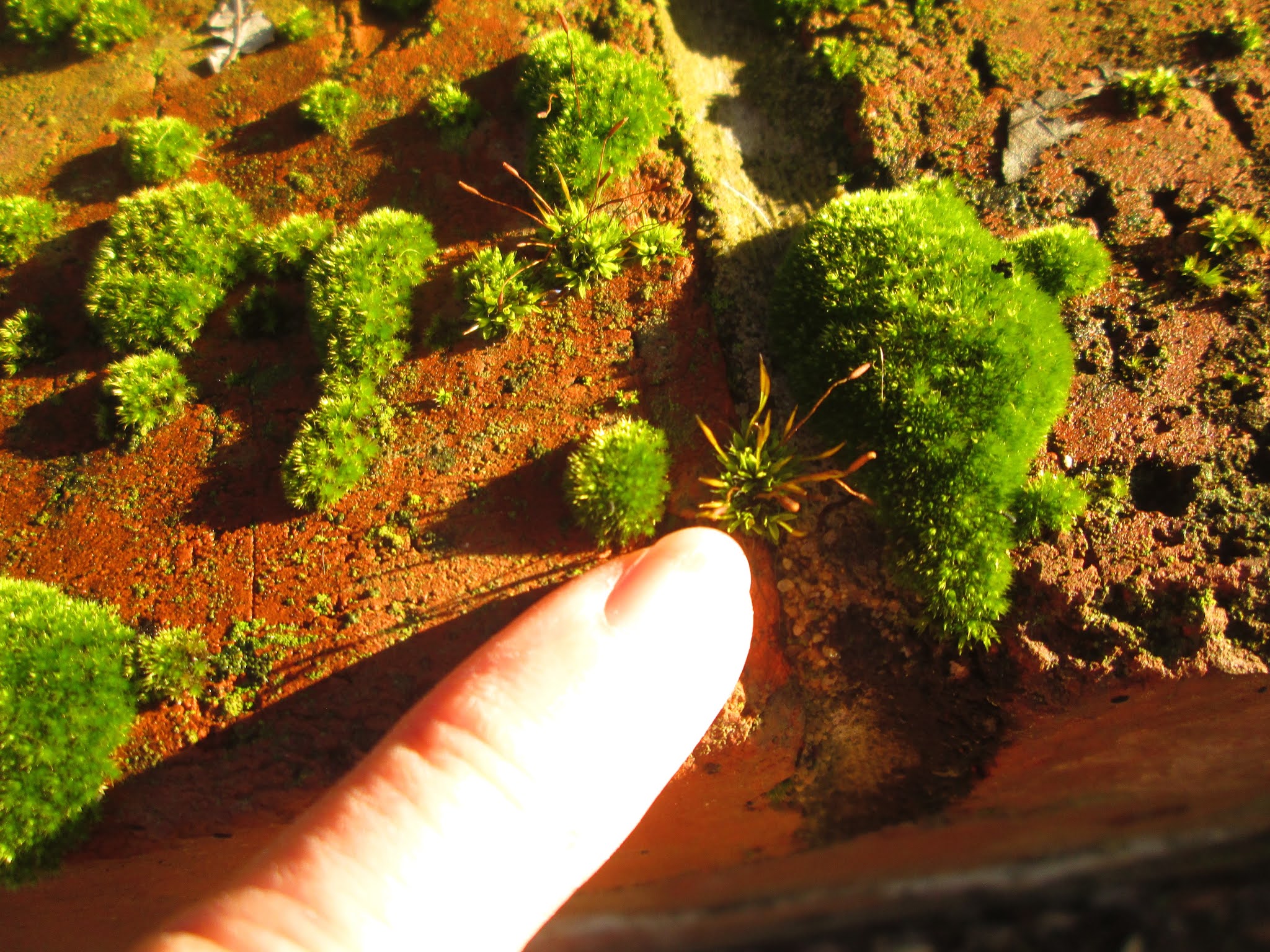
Technically, mosses grow all year here, but any time a plant blooms, I think spring, and the mosses on some nearby bricks are definitely blooming (or whatever it is that mosses do--I feel a need for study coming on). Their miniature worlds please me.


Of course, the plants we usually associate with spring are out there as well. Daffodils are poking up, and a neighbor's snowdrops are in full bloom. At least two kinds of asters are showing foliage, and the snow crocuses are the unmistakable announcement that spring is on its way.

Bring it on.

Saturday, January 9, 2021

Uncomfortable truths

 I have frightened myself this week. While viewing the live footage of the attack on the Capitol, I found myself wanting the police to open fire and leave not a single corpse twitching.

It would be easy to say, “This is not who I am.” But of course, it is. I felt it, so honesty demands that I own it. Now politicians and commentators of all stripes are clutching their pearls (or their balls) and saying, “This is America. This is not who we are.”

Bullshit. Political violence is as American as apple pie, going back at least to the Whiskey Rebellion of 1791. Arguably, America was built on political violence (1776, anyone?), to say nothing of genocidal elimination of the Other. Any of us could probably create a list of atrocities perpetrated on this continent and quite likely in our names. We are not a nation of innocent children and never have been. An innocent nation-state has never existed, and tribal and other forms of warfare existed long before that. Humans are not a nice species.

Our bodies evolved with a fight-or-flight response, which was exceedingly useful in those millennia when we were likely prey animals and since then has kept many people alive in emergency situations. In those Wednesday afternoon moments when our nation's Capitol and legislature were under siege by marauding barbarians (or so a Roman citizen would have felt when the Visigoths invaded), when adrenaline was pumping and overwhelming other parts of my brain, “Slay them all, God will know his own” (check out the Albigensian Crusade) seemed a reasonable response. And if the aim is simply to eradicate the immediate threat and get out with one's skin reasonably intact, it is.

But it is no way to run a country, especially not one of over 300 million people, numbers unimaginable to those long-ago mammals who were evolving our hormonal responses. I suspect those numbers were also unimaginable to the writers of the US Constitution. The marauders who invaded our Capitol this week saw themselves as warriors. During their takeover and at many times before and since then, as a member of a religious and (in my part of the world) political minority, I have felt that I lived in an armed camp hostile to my very existence. Never mind that I managed a thirty-year career as a teacher and except for vandalized political signs and occasional catcalls have lived relatively unmolested. Adrenaline does not think, and it overwhelms our kinder impulses. It comes close to murdering our better angels.

I do not have any final wisdom to offer. I do not know the best way for Congress and law enforcement to proceed at this time. I do know that if a generally mild-mannered English teacher and people who own pool-cleaning companies or sell real estate (to name only two professions represented among the rioters) can move quickly to blind blood rage, we have work to do. Killing anyone who disagrees with us is not the best way to go about it.

Here is a flower. With a butterfly. Breathe. Maybe then we can talk.


Thursday, December 31, 2020

Looking Ahead

     There is no question that 2020 has been a difficult year. We have seen way too many deaths that should have been avoidable, along with all the economic disruption caused both by the virus itself and our attempts to control it (which might have been more successful had more supposed adults done as public health experts asked). Schools closed, and parents not trained as teachers suddenly had to oversee online education for kids who were missing their friends and not wanting to sit in front of a screen (a natural and healthy reaction, let me add). The natural world gave us wildfires, hurricanes, and murder hornets. The US had an election that should have ended eight weeks ago. (I am hoping that four-year presidential campaigns and unending elections do not become the norm.) Mental health hotlines have been flooded with calls.

    But for introverts who managed to stay healthy, 2020 has not been so bad. Sitting in one's favorite chair with a book became a perfectly respectable semi-activity. Taking long walks alone became normal. Puttering around the house or in our gardens instead of socializing became a reasonable choice. Indeed, avoiding social events became a civic virtue, not the sign of depression that many extroverts seem to assume it is. (Not to be too critical of my extrovert friends, but in my experience most extroverts seem unable to understand that some people find their energy depleted by too much time spent in the company of humans.) Articles on how to enjoy time alone proliferated.

    Yes, 2020 was a good year for introverts.

    But now, the vaccine rollout has begun, and we can hope that infection and death rates from the novel coronavirus will begin to decline. This is absolutely a good thing. By this time next year, the world may have returned to “normal.” This is going to be a serious adjustment for some of us.

    It is likely that people will want to make up for lost time, so there will be an upsurge in parties. Gaggles of humans will become commonplace again, and extroverts will want to see all the people from whom they have been separated for the duration of the pandemic. We will all be receiving lots of invitations from people we like. Bars and restaurants will be packed, making a quiet meal or drink with friends impossible in any public place. Every weekend in any month of remotely decent weather will have its festival, with every civic-minded person expected to come out in support of whatever-it-is (and all our civic organizations need our support, so I get it). Spending significant chunks of time with humans will be expected.

    Extroverts, please be considerate of your introvert friends. After so many months of blessed quiet, we will not be okay.


Alone but not lonely in Cozumel


Saturday, December 26, 2020

An optimized life (feline version)

         The last week of the year seems to bring lots of year-end and New Year's resolution-type advice. Much of it seems to concern ways to optimize one's life. An optimized life seems to involve increasing the efficiency with which daily tasks are performed so that more can be accomplished while also pondering questions like "Do I have a sense of direction for my life?" and "Do I know what my purpose is?" It also seems to involve a daily schedule that begins with yoga or running at 6:00 AM and gives each hour its assigned task. 

     I fear my life was never optimized, and, four years into retirement, I suspect it is not likely to be. This situation could be cause for angst, but during the pandemic, I have spent more time with cats than with humans. Cats, at least our three, do not appear to be Pondering The Meaning of Life or seeking ways to accomplish more in any given twenty-four-hour period--or at least, not very often. Mittsy, the polydactyl adopted from a shelter in 2006, does occasionally appear to be Thinking Deep Thoughts.


    However, this sort of pondering is not typical. A favorite activity in warm weather is hanging out on her cat tree on the screened porch, watching the bird feeder. These days, she demands to go onto the porch, then approximately two and half minutes later demands to come in, then in an hour or so. . . but those who live with cats may have seen this behavior.

    Another of Mittsy's favorite activities is killing the cat toys, announcing at great volume that she has done so, and bringing the hunting trophies to The Human as gifts. Particular favorites are the fuzzy dice intended by a nephew as decorations for a classic car he was restoring but stolen off the coffee table by the feline who proceeded to attack them with great ferocity.

    As she has aged, however, Mittsy's favorite pastime appears to be napping, particularly if a sunbeam can be found. Today, she and Feraldine found good spots on a sofa (covered as protection against hairballs in yet another example of The Human's non-optimized life).

    Poor Feraldine, adopted as a backyard stray at approximately six months of age, almost certainly does not have an optimized life. We seem to have missed her socialization window, with the result that, after thirteen years in the house, she remains aware of herself as potential prey and not particularly trusting of humans or other living things (with the exception of Mittsy). She has, however, discovered that Humans are the source of Feline Greenies and can be trusted for occasional head rubs. She is also fond of naps in sunbeams.


    Mirabel, at seventeen the eldest of our girls, may be the most optimized. Certainly, she is the most active, getting her early exercise by walking on The Human until verticality is achieved and canned cat food is provided. She also spends the most time in the presence of human knowledge, staring at the computer screen and whatever book The Human happens to be reading. She likes the work desk. Occasionally, she even tries to help with projects.


    The cats have not told me what their purpose is. I am not certain they are conscious of having one. I do not know if they think they are living their best life. It is quite possible they are not, as The Human does not cook organic free-range chicken for them but buys their food at Kroger, and most of their toys are wine corks or old socks stuffed with catnip and crinkly plastic packaging. They do not get regular shipments from Chewy.com. But if purring is a sign of feline satisfaction, they seem to do a fair amount of it.
    
    Is contented optimal enough? That might be a question to ponder during a long pandemic winter.